What is a Visitor Visa?
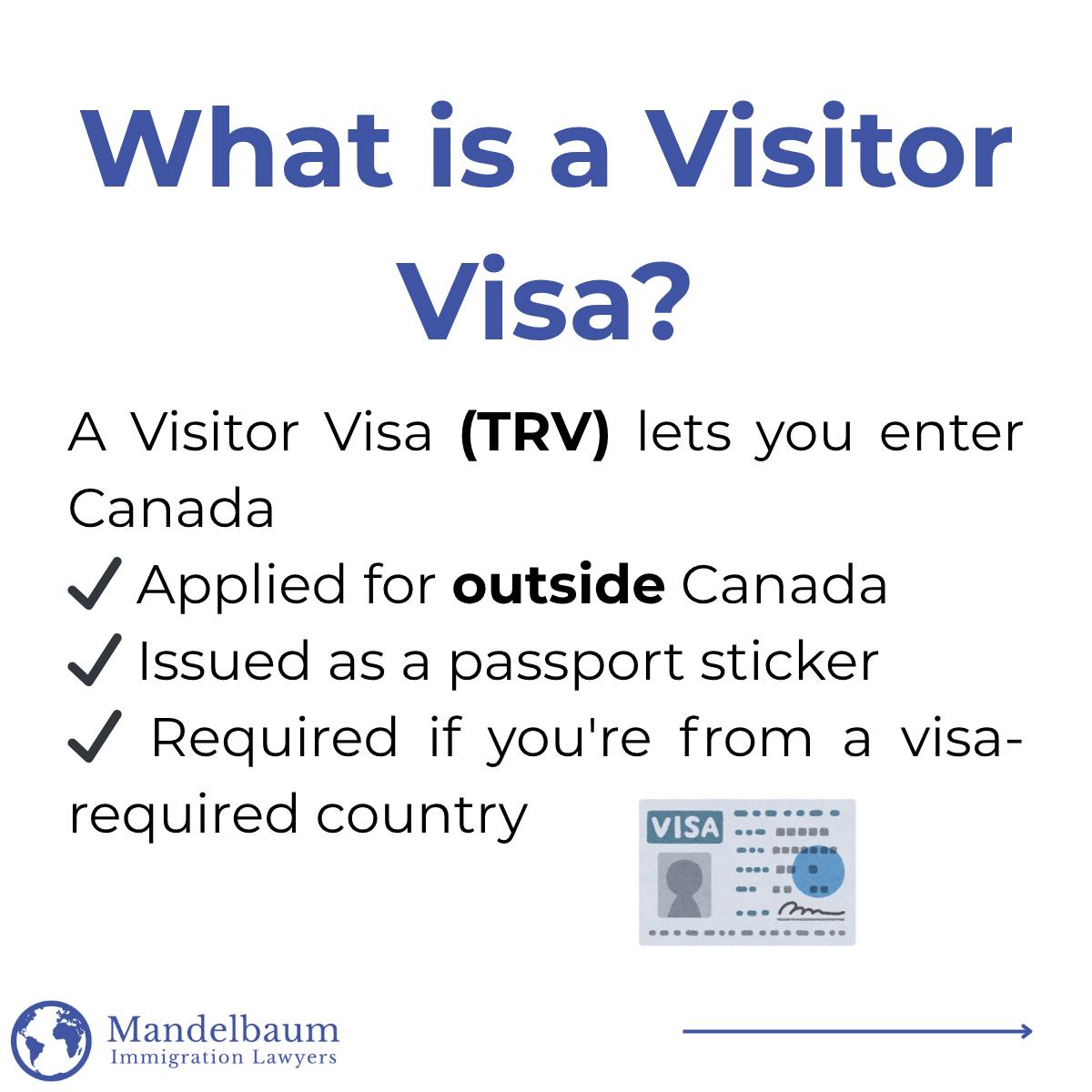
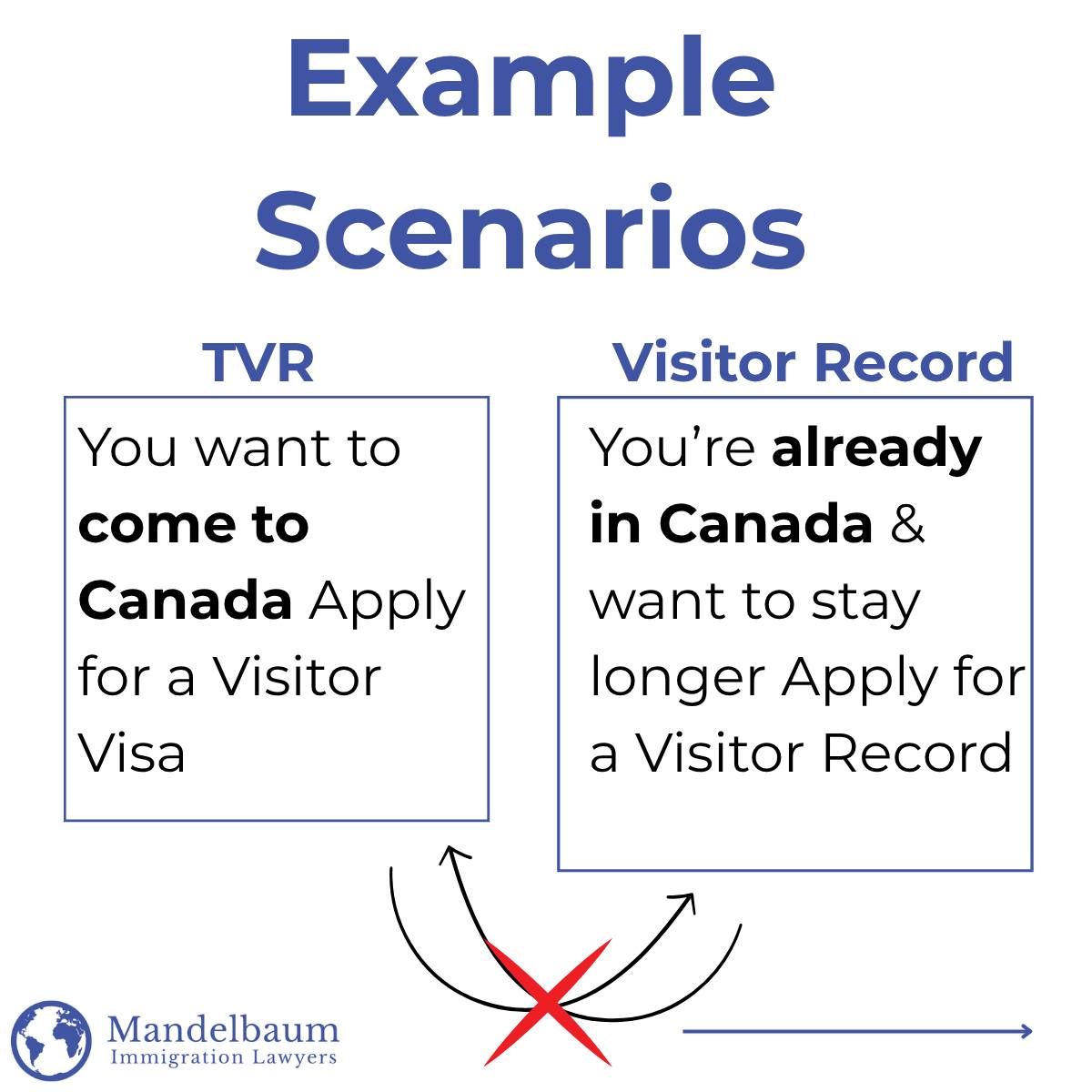
Your Visitor Visa technically a Temporary Resident Visa lets you enter Canada. You apply from outside Canada, and once approved, the visa shows up as a sticker in your passport.
If you’re from a visa-required country, you need this TRV to board your flight. No valid TRV, no entry to Canada.
Your TRV doesn’t control how long you can stay once you arrive. That decision happens at the port of entry when a border officer examines your documents and stamps your passport showing your authorized period usually up to six months.
What is a Visitor Record?
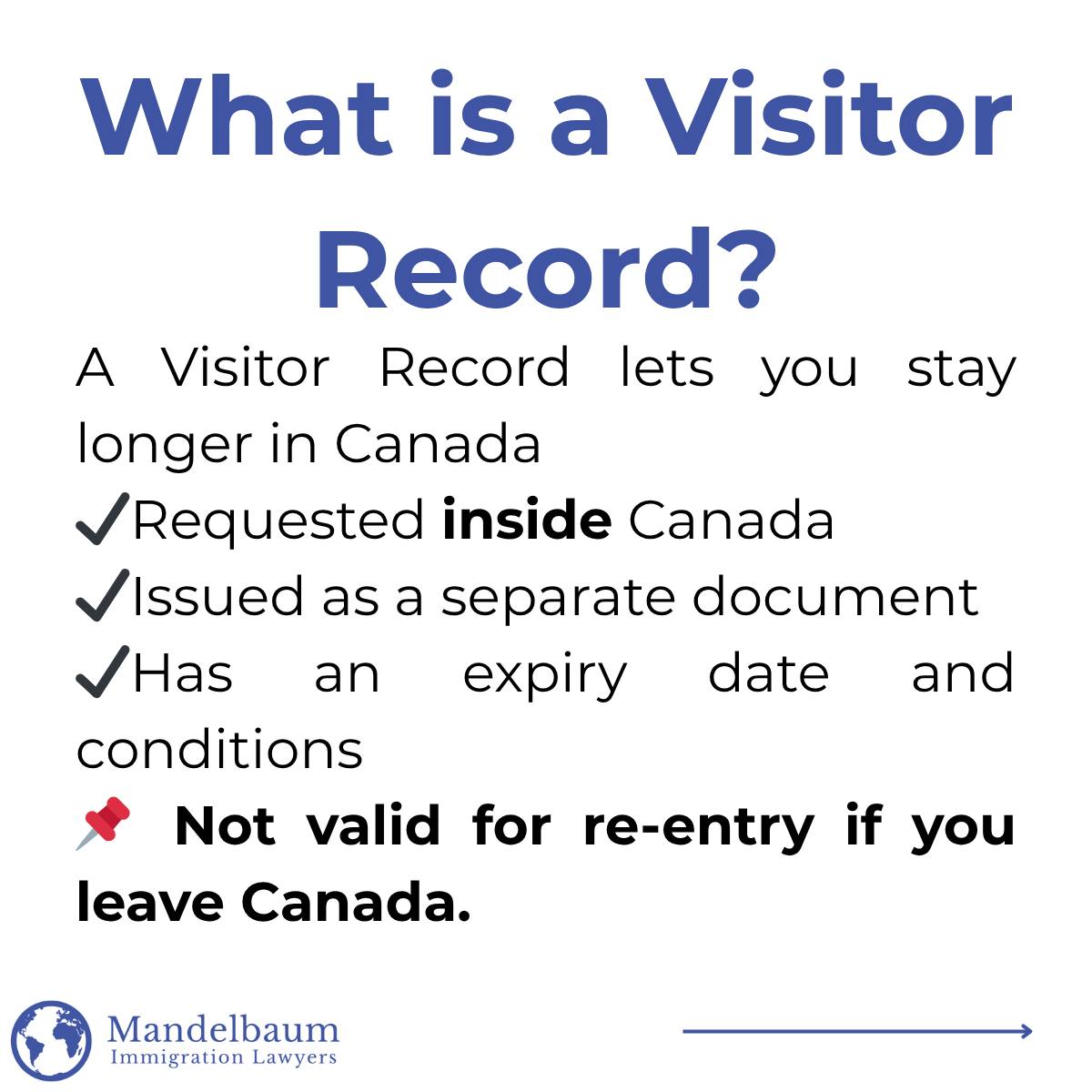
A Visitor Record does something completely different. You request this when you’re already inside Canada and need to extend your stay beyond what the border officer originally authorized.
Say you entered Canada planning a three-month visit. Two months in, you realize you need more time maybe family needs help, maybe you’re working on something that takes longer than expected, whatever the reason. You apply to IRCC for a Visitor Record before your authorized stay expires.
If approved, they issue a paper document showing your new authorized end date and any conditions on your extended stay.
The Critical Difference for Re-Entry
People assume a Visitor Record works like their visa, that it lets them leave and return to Canada. It doesn’t work that way at all.
A Visitor Record only extends your legal status while you remain inside Canada. Leave the country, and you need your TRV to get back in.
You need a valid TRV in your passport to re-enter Canada, period. Your TRV expired while you were here? You’re stuck outside Canada until you get a new one, even though your Visitor Record says you’re authorized to be in the country.
How to Extend Your Visitor Visa in Canada
When people ask “how to extend visitor visa in Canada,” they usually mean they want to stay longer. What you actually need is a Visitor Record, not a visa extension.
You apply for a Visitor Record from inside Canada before your current authorized stay expires. The application goes to IRCC, not to a visa office. Processing times vary, but you need to apply well before your status expires waiting until the last minute creates problems.
How long can you extend your visitor visa in Canada? There’s no automatic limit, but IRCC assesses each application based on your circumstances. Multiple extensions raise questions about whether you’re actually a temporary resident or trying to live in Canada permanently without proper authorization.
Common Mistakes That Create Problems
This scenario plays out constantly: Someone’s been in Canada for months on a Visitor Record extension. Family emergency comes up back home, or they want to visit the United States for a weekend. They head to the airport or border, and that’s when they discover their TRV expired months ago.
What should have been a short trip turns into weeks or months waiting while a new visa application processes from outside Canada.
Another common mistake staying even one day past your authorized date. This creates a problem on your immigration record that follows you. Removal orders, bans on future entry, complications with future work permits, study permits, or permanent residence applications.
After Biometric What is Next for Canada Visitor Visa?
After you complete biometrics for your visitor visa application, your application moves to the processing queue. Processing times vary by visa office and your country of residence.
You can check your application status online through your IRCC account. Once a decision is made, you’ll receive notification. If approved, you’ll need to send your passport to the visa office so they can place the TRV sticker in it.
Can You Convert Visitor Visa to Work Permit in Canada?
Converting from visitor status to a work permit from inside Canada is possible in limited circumstances, but it’s not automatic and it’s not available to everyone.
You generally need a valid job offer and either an approved LMIA from your employer or eligibility for an LMIA-exempt work permit category. Some work permit categories allow you to apply from inside Canada while others require you to apply from outside Canada.
This is a complex area where mistakes cost time and money. Getting professional advice before attempting to convert from visitor to worker status prevents problems.
How to Appeal Canada Visitor Visa Refusal
If your visitor visa was refused, there’s no formal appeal process. You can’t take a refused visitor visa to the Immigration Appeal Division.
Your options are limited you can reapply with stronger documentation addressing the refusal reasons, or you can request reconsideration if you believe the officer made an error in assessing your application.
For refusals where you believe the officer violated procedural fairness or made an obvious legal error, judicial review in Federal Court might be possible, but this is rare and requires demonstrating the decision was unreasonable, not just that you disagree with it.
When to Get Legal Advice
Immigration documents and timing requirements aren’t straightforward. The rules for extending your stay, applying for a Visitor Record, renewing your TRV each process involves specific requirements and deadlines.
Our immigration lawyers work with visitors navigating these situations regularly. We review whatever documents you currently have, figure out what you actually need based on your specific plans, and handle the applications to keep you in legal status.
Whether you need to extend your current stay, you’re planning travel outside Canada, or you’re not sure what your documents actually allow you to do, getting answers prevents mistakes.