
What Is Express Entry and Why Does It Matter?
Express Entry is Canada’s primary system for managing immigration applications from skilled workers. Since its launch, it has played a central role in supporting Canada’s economic growth by matching skilled immigrants with labour market needs.
In 2023, Immigration, Refugees and Citizenship Canada (IRCC) introduced a significant change: category-based selection. Rather than relying solely on the Comprehensive Ranking System (CRS) score, which ranks applicants on factors like education, language skills, and work experience, Canada began drawing candidates who fit specific economic priorities.
The 2026 priorities, announced on February 18, 2026, take this approach further.
Canada’s 3 Economic Priorities for 2026
The Government of Canada has identified three economic priorities that will shape Express Entry draws this year.
1. Addressing Labour Shortages
Canada is targeting candidates in sectors facing critical shortages:
- Healthcare and social services
- STEM (science, technology, engineering, mathematics)
- Trades
- Agriculture and agri-food
- Education
If your occupation falls within these fields, your profile may be prioritized in upcoming draws, even if your CRS score is not the highest in the pool.
2. Supporting Francophone Immigration Outside Quebec
Canada continues to invest in French-speaking communities outside Quebec. Candidates with strong French-language proficiency are being prioritized as part of this commitment, regardless of their province of destination.
3. Facilitating Leadership and Innovation
This new priority category targets:
- Senior managers
- Skilled military recruits for the Canadian Armed Forces (CAF)
- Scientists and researchers
This reflects Canada’s broader goal of attracting talent that can contribute to leadership, innovation, and national priorities.
What This Means If You Have an Express Entry Profile
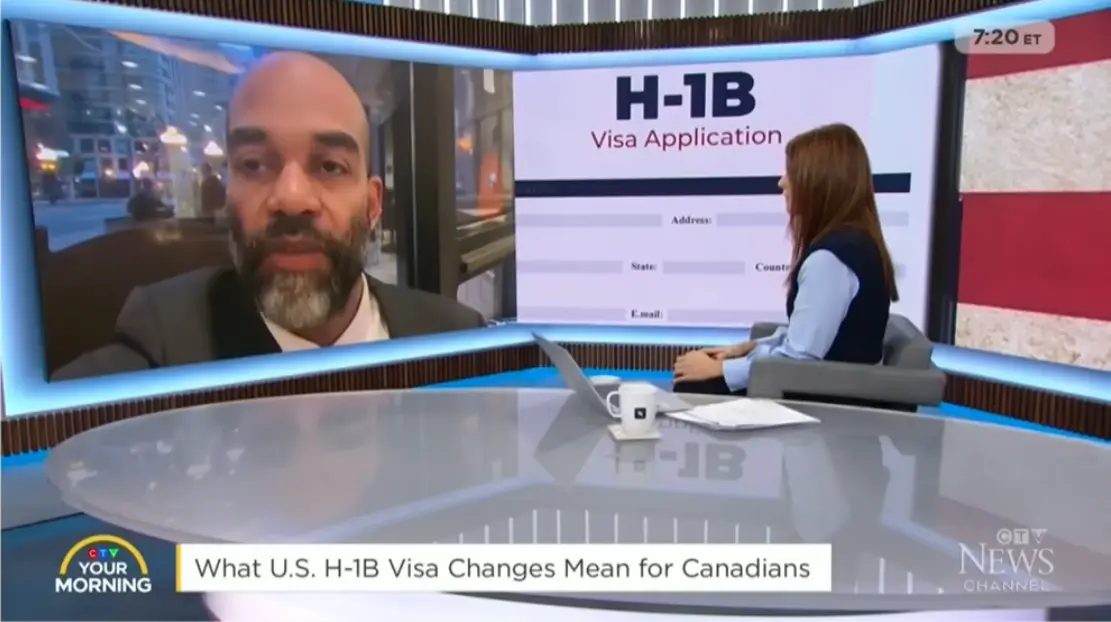
Canada’s approach to Express Entry has shifted significantly. As Rabeea explained on CTV Your Morning:
“When we talk about categories, the government introduced category-based draws where we had certain ones that came out just now, certain occupations are targeted towards candidates who have work experience in Canada.”
This is a meaningful departure from the earlier system, which relied almost exclusively on CRS scores. The government has been direct about its goals. In a statement on February 24, 2026, IRCC described the shift this way:
“The Government of Canada is focusing immigration on where it delivers the greatest impact — filling labour gaps, strengthening key sectors of the economy and supporting communities across the country.”
The practical effect is already visible. As Rabeea noted, draws are now being issued for specific occupational profiles:
“We had a draw recently for physicians with Canadian work experience. So doctors and physicians who are working in Canada… people come to Canada with medical experience — nurse practitioners, etc. — and then they get here and they can’t [practice right away]. It still remains to be seen how these draws are going to be structured.”
That last point matters: the 2026 priorities are newly announced, and the full picture of how draws will unfold is still emerging. Canada is shifting toward a more targeted immigration approach, and this means Express Entry draws may prioritize certain occupations rather than simply inviting the highest CRS scorers.
If your occupation is in a priority sector: Your chances of receiving an invitation to apply (ITA) may improve significantly in 2026, even with a moderate CRS score.
If your occupation is not in a priority sector: Rabeea’s advice is direct: “Don’t panic, but don’t just sit and wait either. You need to start being strategic about your profile by focusing on improving your CRS score through language, experience, or education, while also exploring alternative pathways like OINP.”
On what this shift means overall: “Express Entry is no longer just about having the highest CRS score. IRCC is now selecting candidates based on specific occupations and economic needs, which makes the system less predictable than before. Your occupation and background now matter more, and you can’t rely solely on your score. You need to think more strategically about how you fit into the system.”
If you have Canadian work experience: The Canadian Experience Class remains a strong pathway. Canadian work experience continues to be one of the most valued factors in the system.
What Opportunities Still Exist?
The 2026 priorities do not close the door on other applicants. Several pathways remain available:
- Canadian work experience through the Canadian Experience Class remains highly competitive. Learn more about permanent residency options in Canada.
- Provincial Nominee Programs (PNPs): Ontario has its own streams that do not rely solely on federal Express Entry draws. Ontario’s Immigrant Nominee Program (OINP) regularly opens streams aligned with local labour market needs in the Greater Toronto Area. See our overview of Provincial Nominee Programs.
- French-language proficiency: Even if your occupation is not in a priority sector, strong French skills can make your profile competitive.
- In-demand skills that align with the identified labour shortages, particularly in healthcare, STEM, and trades.
Toronto and Ontario: What to Know
For skilled workers already in Toronto or Ontario, the 2026 priorities align closely with the GTA’s labour market. Healthcare, STEM, and education are among the region’s most in-demand sectors. If you are currently working in one of these fields in Toronto, now is the time to review your Express Entry profile and ensure it accurately reflects your qualifications.
Ontario’s OINP also moves in alignment with federal priorities. Streams targeting healthcare and STEM workers in Ontario have historically opened in the months following federal priority announcements.
If you are on a work permit in Canada and building toward permanent residency, the 2026 priorities may directly affect your timeline and strategy.
Is Your Profile Still Competitive? Speak With Our Team.
The shift to category-based selection means that what worked in 2024 may not be the right strategy in 2026. As Rabeea puts it: “You need to be proactive. Don’t rely on just one pathway. Start thinking about how to position yourself within a category, or what steps you can take to become eligible for one. Immigration is becoming more targeted, and now more than ever, you need a better strategy.”
Our team of immigration lawyers in Toronto reviews Express Entry profiles, identifies the right pathway for your background, and helps you build a strategy that reflects the current priorities.
To book a consultation with Rabeea Khalid or another member of our team, fill out our immigration questionnaire or call us at (416) 646-3523.